
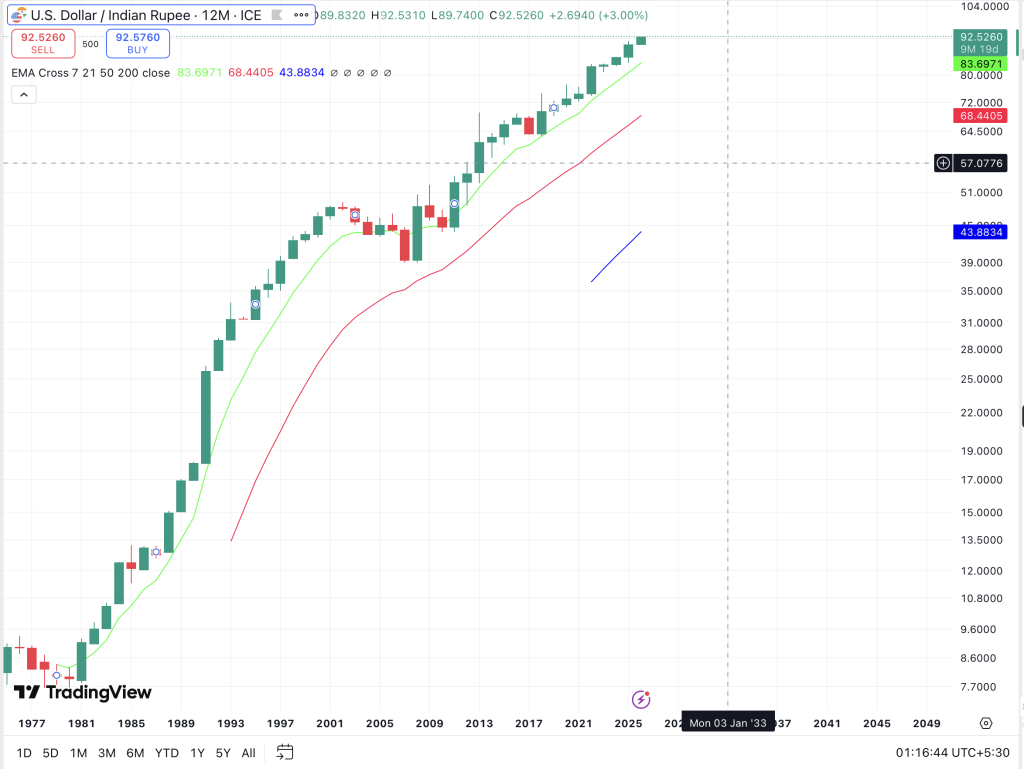
The Rupee’s Slide: Why It’s Happening and What It Means
Recently, the Indian rupee has experienced considerable volatility in its exchange rate with the US dollar. various news articles mention the “declining rupee,” but what are the actual effects for India’s economy and everyday citizens? A depreciating currency can influence a range of factors including fuel costs, overseas travel, and even employment prospects in export-oriented sectors. Talking about the reasons behind the rupee’s decline and its implications empowers individuals, businesses, and policymakers to make more informed financial choices. Understanding Currency Depreciation Currency depreciation happens when the value of a country’s currency decreases compared to other currencies. In India’s case, the rupee is most often compared with the US dollar because global trade is largely conducted in dollars. For example, if earlier $1 was equal to ₹80 and now $1 equals ₹90, it means the rupee has depreciated. Simply put, Indians now need more rupees to buy the same amount of dollars. This change might look small on paper, but it can have widespread economic effects. Currency values change every day in global markets depending on trade flows, investments, economic performance, and geopolitical events. Era Approx. Rate (1 USD to INR) Key Drivers 1947 ₹3.30 Pegged to British Pound 1975 ₹8.39 1973 Oil Crisis impact 1990 ₹17.01 Fiscal deficits & rising inflation 2000 ₹44.31 Post-liberalisation market shifts 2010 ₹46.02 Post-2008 recovery 2020 ₹74.31 COVID-19 pandemic uncertainty 2026 (Mar) ₹92.56 High energy costs & global dollar strength Major Reasons Behind the Rupee’s Slide The rupee’s decline is usually not caused by a single factor. Instead, several economic and global forces combine to push the currency up or down. 1. Rising Crude Oil Prices India imports a large portion of its crude oil from other countries. Oil purchases are made in US dollars, so when oil prices rise, India must spend more dollars to buy the same amount of oil. Higher demand for dollars increases pressure on the rupee and causes it to weaken. Since oil is essential for transportation, manufacturing, and electricity, rising oil prices quickly affect the entire economy. 2. Trade Deficit A trade deficit occurs when a country imports more goods than it exports. India imports items such as oil, gold, electronics, and machinery in large quantities. When imports exceed exports, more dollars leave the country than enter it. This increased demand for dollars leads to a weaker rupee. Reducing the trade deficit by boosting exports is one of the long-term ways to strengthen the currency. 3. Foreign Investment Outflows Foreign investors often invest in Indian stock markets, bonds, and startups. However, during global uncertainty or economic slowdown, these investors sometimes pull their money out of emerging markets. When foreign investors sell Indian assets, they convert rupees into dollars and move the money abroad. This increases demand for dollars and puts downward pressure on the rupee. 4. Strength of the US Dollar The US dollar is the world’s most dominant currency. When the US economy grows strongly or interest rates rise, investors prefer holding dollars instead of other currencies. A stronger dollar automatically makes many global currencies—including the rupee—appear weaker. 5. Global Geopolitical Tensions Wars, political conflicts, and global economic instability often affect currency markets. Investors tend to move their money to safer assets like US dollars during uncertain times. This shift reduces investment in emerging economies like India and contributes to the depreciation of the rupee. Effects of a Weak Rupee A falling rupee can have both negative and positive consequences for the economy. Negative Effects 1. Higher Inflation When the rupee weakens, imported goods become more expensive. Since India imports many essential products such as fuel and electronics, prices rise across the economy. Higher fuel prices also increase transportation costs, which eventually raise the prices of food and other goods. 2. Expensive Foreign Travel and Education Students studying abroad or people traveling overseas must spend more rupees to obtain foreign currency. Tuition fees, living expenses, and travel costs increase significantly when the rupee weakens. 3. Increased Cost of Foreign Loans Companies or governments that borrow money from foreign lenders must repay their loans in dollars. When the rupee falls, the cost of repayment increases in rupee terms. Positive Effects Although a falling rupee has several disadvantages, it also brings some benefits. 1. Boost to Exports When the rupee weakens, Indian goods become cheaper for international buyers. This helps exporters in industries such as IT services, textiles, pharmaceuticals, and manufacturing. Higher exports can support economic growth and create employment. 2. Higher Value of Remittances Millions of Indians work abroad and send money back home. When the rupee depreciates, families in India receive more rupees for the same amount of dollars sent by relatives working overseas. Is a Weak Rupee Always a Problem? A gradual decline in a currency’s value is not always harmful. In fact, many growing economies allow their currencies to depreciate slowly over time due to inflation differences and economic adjustments. However, a sudden or sharp decline in the rupee can create economic instability, increase inflation, and reduce investor confidence. That is why policymakers closely monitor currency movements. Role of the Central Bank The Reserve Bank of India (RBI) plays a crucial role in managing currency stability. It can intervene in the foreign exchange market by selling dollars from its reserves to support the rupee. The central bank also adjusts interest rates and monetary policies to control inflation and attract foreign investment. India maintains large foreign exchange reserves to protect the economy during global financial shocks. What It Means for Ordinary People For everyday citizens, the rupee’s value can influence several aspects of daily life: Understanding currency movements helps individuals make smarter financial choices, especially when planning investments, education abroad, or international travel. Conclusion The slide of the rupee is the result of multiple interconnected factors, including rising oil prices, trade imbalances, foreign investment flows, and global economic conditions. While a weaker rupee can make imports more expensive and contribute to inflation, it can also boost exports and increase the value of remittances. The key challenge for policymakers is to maintain a